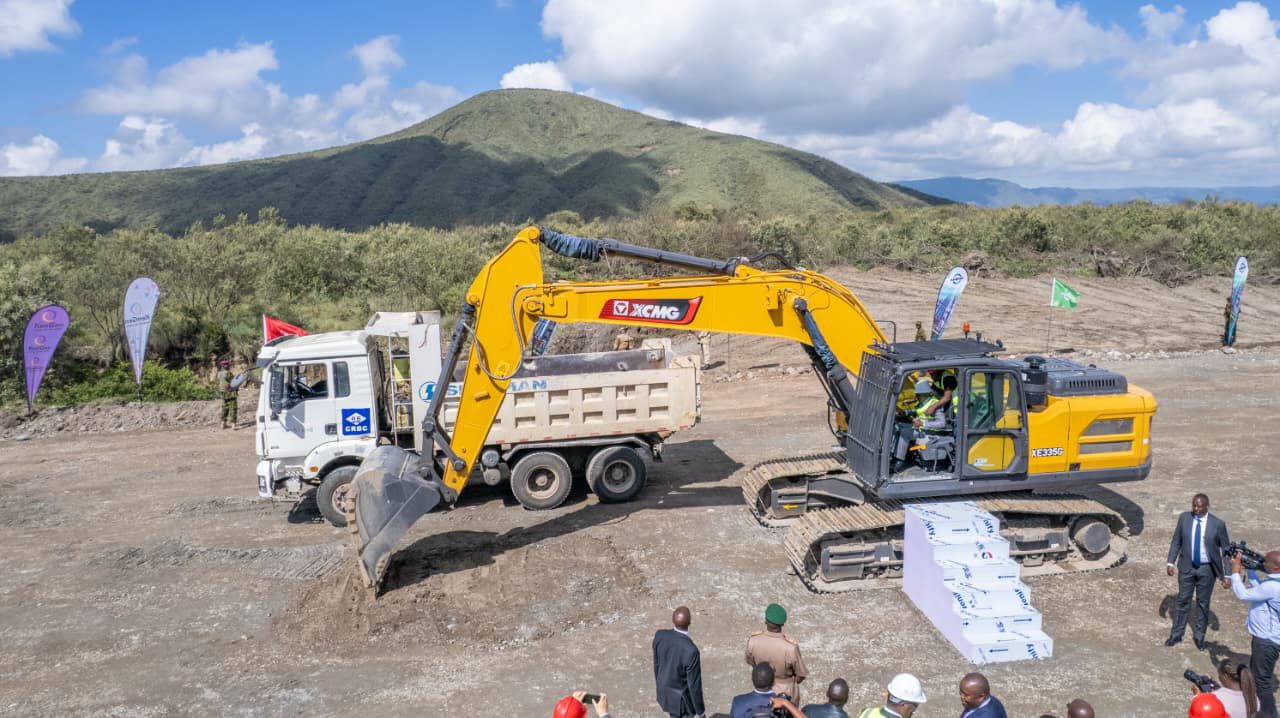
Kenya has unveiled a geothermal-driven fertiliser plant that authorities say will reshape how the country secures key farm inputs and strengthen efforts to achieve reliable food production.
The groundbreaking ushers in a plan to use the country’s vast geothermal resources to manufacture fertiliser locally, easing dependence on overseas supplies and cushioning farmers from global market turbulence.
The initiative brings together Kenya Electricity Generating Company and China’s Kaishan Group in a long-term partnership.
Under the deal, Kaishan’s local arm, Kaishan Terra Green Ammonia, will put up and manage the plant, while KenGen will provide 165 megawatts of geothermal power to support green ammonia and fertiliser output for thirty years. Annual production is targeted at between 200,000 and 300,000 tonnes, enough to cover most of the country’s current needs.
KenGen said the scheme aims to bring stability to fertiliser prices by cutting exposure to dollar-priced imports, boosting farmer confidence and improving planning in the agriculture sector. The company expects to earn an estimated 13 million dollars in annual profit after the facility becomes fully operational.
Its managing director, Peter Njenga, welcomed the move, calling it a major step in linking clean power with manufacturing.
“This is a milestone in clean industrialisation,” he said, adding that geothermal energy offers a pathway to build industries that are both modern and environmentally safe. He described geothermal as the “bridge between Africa’s green energy potential and its manufacturing future”.
Fertiliser is central to Kenya’s food system, especially for maize production. The country has relied heavily on imported supplies from nations including Russia and Saudi Arabia, spending tens of billions of shillings each year.
Sharp shifts in global pricing have repeatedly hit farmers, prompting government interventions and raising concerns over food supply stability.
Since taking office in 2022, President William Ruto’s administration has been running a fertiliser subsidy programme through the National Cereals and Produce Board to ease the load on growers and push up harvests.
At the launch, he said the new plant aligns with long-term food plans while supporting youth employment and local industry.
“This project shows that Kenya is not just a leading producer and consumer of clean energy; we are now going further to add value and generate prosperity from it,” he said. “By harnessing our geothermal wealth, we are lowering fertiliser costs, supporting our farmers, and contributing to global climate goals.”
Fresh data shows fertiliser imports have eased for a second year after record levels in 2023. Between January and June this year, imports reached 443,701 tonnes valued at about Sh25.63 billion, slightly lower than the 445,857 tonnes worth Sh27.71 billion recorded in the same period last year.
The decline extends the drop from the 2023 peak of 629,566 tonnes valued at Sh44.8 billion, a two-year contraction of roughly one-third in quantity and more than two-fifths in value.
Officials say the new facility will support over 2,000 jobs during building, daily running, logistics, maintenance, and supply chain operations. With maize remaining the staple for most families, authorities argue the factory will help protect the country from costly price shocks. “Our agriculture is highly dependent on fertiliser prices, with high prices leading to a decline in maize output nationally.
As we know, maize is the staple crop that feeds millions of Kenyans. That is why domestic, competitively priced fertiliser matters not just for commerce, but for food security for our people,” the statement noted.































Comments
Sign in with Google to comment, reply, and like comments.
Continue with Google